
September 11th, 2025
2025 DFCI-TPD In Person Meeting
11.30-12.00 pm Arrival, Registration and Boxed lunch
12:00 -12:10 pm Welcome Remarks
Dana-Farber Targeted Protein Degradation Organizing Committee Mikołaj Słabicki, Katherine Donovan
12:10 -1:10 pm Keynote: Nathanael Gray, Stanford University, host: Katherine Donovan
Chemically Induced Proximity to achieve Gain of Function Pharmacology
1:10 - 1:40 pm Georg Petzold, Monte Rosa Therapeutics, host: Zuzanna Kozicka
Redefining the Rules of Neosubstrate Recognition by CRBN
1:40 - 2:10 pm Matthew Oser, Dana-Farber Cancer Institute, host: Hubert Huang
CRISPR Screening to Dissect Protein Stability Mechanisms of Lineage Transcription Factors in Small Cell Lung Cancer
2:10 – 2:40 pm Brian Liau, Harvard University, host: Mikołaj Słabicki
Converging Mechanisms between a Molecular Glue Degrader and Neomorphic Cancer Mutations in an E3 ligase
2:40 – 3:10 pm Light snack / Coffee break
3:10 – 3:40 pm Xin Gu, Dana-Farber Cancer Institute, host: Zuzanna Kozicka
Catching Transcription Factors for Proteasomal Degradation
3:40 – 4:10 pm Danette Daniels, Foghorn Therapeutics, host: Breanna Zerfas
Towards New Cancer Medicines with Degraders of Chromatin Regulatory Proteins
4:10 – 4:40 pm Lyn Jones, Dana-Farber Cancer Institute, host: John Che
Covalent Cereblon Modulators – Targeting Residues Beyond Cysteine’
4:40 – 5:10 pm Ralph Mazitschek, Mass General Hospital, host: Hubert Huang
Unified Platform for Comprehensive Biochemical and Cellular Profiling of Small-Molecule Degraders
5:10 – 8:00 pm Reception (Appetizers and Open Bar)
Event Location: Linda K. Paresky Conference Center, Simmons University 300 Fenway Boston, MA 02115.
There is a limited number of registration slots available and is based on the seminar room capacity. Registration will work on a first come first served basis. Registration is free of charge, but please cancel your registration (drop line to DFCI.TPD@gmail.com) if you cannot join to open space for others.
Event organized by:
Dana-Farber Targeted Protein Degradation Organizing Committee
Mikołaj Słabicki, Katherine Donovan, Breanna Zerfas, Zuzanna Kozicka, Hubert Huang, John Che
Sponsored by:


September 25th, 2025
Host: Hubert Huang
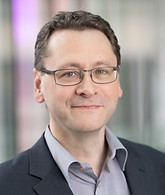
Ed Tate
GSK Chair in Chemical Biology, Imperial College & Francis Crick Institute
Chemical biology for drug discovery: proximity-induced pharmacology and ADC payloads
Ed holds the GSK Chair in Chemical Biology at Imperial College London, and he is a Group Leader at the Francis Crick Institute. Following his PhD (2000) with Steve Ley in Cambridge and postdoctoral research in Paris as an 1851 Fellow and Howard Trust Fellow, he was awarded a BBSRC David Phillips Fellowship in 2006 to start his group at Imperial College. He sits on the advisory boards of several international research institutes and biotechs, and develops new drug discovery technologies with companies including Pfizer, GSK and AstraZeneca. His research has been recognised by awards and Fellowships, most recently the 2019 Sir David Cooksey Translation Prize, the 2020 Corday-Morgan Prize of the RSC, a 2022 Cancer Research UK Programme Award, and the 2024 RSC Horizon Prize. In 2023 he was appointed to the GSK Endowed Chair in Chemical Biology at Imperial College. Ed is also academic founder of several companies developing his lab’s research toward clinical applications, including Siftr Bio and Myricx Bio, which in 2024 raised one of the largest Series A rounds to date for a European biotech.
October 9th, 2025
Host: Zuzanna Kozicka
Dual E3 ligase recruitment by monovalent degraders enables redundant and tuneable degradation of SMARCA2/4.
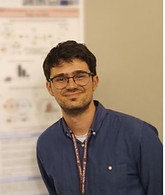
Alejandro Correa-Sáez
Centre for Targeted Protein Degradation, University of Dundee
Alejandro Correa-Sáez has been a Postdoctoral Research Fellow at the Centre for Targeted Protein Degradation (CeTPD), University of Dundee, since 2023, under the supervision of Professor Alessio Ciulli. He obtained his PhD in Biomedicine from the University of Córdoba (Spain) in 2022. Currently supported by a Marie Skłodowska-Curie Fellowship through UKRI,his research focuses on developing novel strategies for the rational design of molecular glues. His broader scientific interests include understanding native mechanisms of protein regulation to guide the design of more effective degraders, as well as exploring how protein degraders can be leveraged to study and characterize cell signalling pathways.
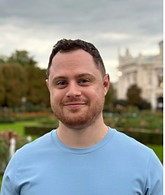
Dmitri Segal
AITHYRA Research Institute
Dmitri Segal is a biomedical researcher interested in understanding how innovative pharmacological strategies can be used to reprogram cancer cells. He obtained his PhD at the University of Toronto under the supervision of Mikko Taipale. He is now a postdoctoral fellow at the AITHYRA Research Institute for Biomedical Artificial Intelligence working in the laboratory of Georg Winter. Here, Dmitri is focused on developing and using proximity inducing pharmacology to regulate and rewire transcriptional circuits in cancer. He also utilizes several genomic screening approaches for characterizing the mechanism-of-action of small molecule degraders to help expand the molecular strategies available for targeted protein degradation.
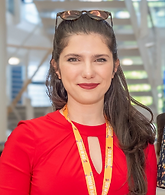
Valentina Spiteri
Centre for Targeted Protein Degradation, University of Dundee
Valentina Spiteri is a structural biologist and biophysicist post-doctoral researcher at the Centre for Targeted Protein Degradation (CeTPD) at the University of Dundee. She is interested in leveraging integrative approaches to unravel novel degrader mechanisms and guide their design. She joined CeTPD in 2021 following the completion of her PhD at University College London. In her time at the CeTPD her primary role has been to work across several collaborative projects with industrial partners including with Boehringer Ingelheim and currently with Eisai with an aim to develop degraders as clinical candidates.
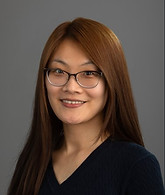
Yunan Zheng
Technology and Therapeutic Platforms, Small Molecule Therapeutics & Platform Technologies, AbbVie
A cellular approach to evaluate E3 ligases for use in TPD
Yunan Zheng earned her PhD in 2018 under Dr. Abhishek Chatterjee, where her research centered on unnatural amino acid incorporation. After graduation, she joined AbbVie’s chemical biology group, dedicating her efforts to developing and implementing novel chemical biology approaches. In 2021, she transitioned to AbbVie’s targeted protein degradation group, continuing her passion for leveraging innovative technologies to address challenging biological questions and advance drug discovery.

October 23th, 2025
Host: Mikolaj Slabicki
Amit Choudhary
Brigham & Women’s Hospital and the Broad Institute
A Scalable Design for Proximity-Inducing Molecules
Amit is an Assistant Professor of Medicine at Harvard Medical School with appointments at the Brigham & Women’s Hospital and the Broad Institute. He performed his predoctoral studies at the Indian Institute of Science‒Bangalore (IISc), working on organic synthesis and protein folding. In 2006, he moved to Univ. of Wisconsin‒Madison to pursue his graduate studies, where he discovered a force that is akin to the hydrogen bond in its quantum mechanical origin and widespread prevalence in biomolecules. In 2011, Amit was elected as a Harvard Junior Fellow and hosted by Prof. Stuart Schreiber at the Broad Institute. Here, he shifted his research focus from quantum mechanical interactions to the development of broadly applicable technologies inspired by specific problems in infectious disease and diabetes. The efforts of Amit’s group have been recognized by Burroughs Wellcome Fund’s Career Award at the Scientific Interface, NIH Director’s Transformative Research Award, DARPA’s SAFE GENES and HEALR awards, Vilcek Prize for Creative Promise, and ICBS Young Chemical Biologist Award. Intellectual property emerging from the Choudhary lab has been licensed to several genome editing companies and Amit is the scientific founder of Photys Therapeutics that leverages the group’s findings on protein editing.


November 6th, 2025
Host: Breanna Zerfas
Daniel Blair
St. Jude Children’s Research Hospital
Dr. Daniel Blair specializes in automated and modular chemical synthesis. He completed both his MSci and PhD with Varinder Aggarwal at the University of Bristol, UK, working on modular chemical synthesis using lithiation-borylation reactions. This was followed by a postdoc at University of Illinois at Urbana-Champaign with Martin D Burke which centered on automated chemical synthesis, and was supported by a Damon-Runyon Postdoctoral Fellowship. In August 2022, he became a part of the St. Jude faculty, as an Assistant Member in the Department of Chemical Biology & Therapeutics. His lab focusses on the developing high-throughput technologies for creating and comparing small molecules for biological significant functions. Today’s seminar will center on the application of high-throughput experimentation toward the identification of molecular glues.
Marie Malone
Nurix Therapeutics
Using DEL to Access New Ligases for Targeted Protein Degradation
Marie Malone is a Director in the DEL and Protein Sciences group at Nurix Therapeutics, where she leads the DEL Screening Group and the Ligase Discovery Program. Prior to joining Nurix Dr. Malone did her Ph.D. at the Scripps Research Institute with Dr. Brian Paegel where she developed DNA-encoded library compatible chemistry and activity-based DNA-encoded library screening methods. Dr. Malone earned her bachelor’s degree in chemistry from the University of Victoria, Canada.

November 20th, 2025
Host: John Che
Frank McCormick
UCSF
Targeting the RAS pathway with glues, degraders and direct binders.
Frank McCormick, PhD, is a Professor at the UCSF Helen Diller Family Comprehensive Cancer Center and holds the David A. Wood Chair of Tumor Biology and Cancer Research. Prior to joining the UCSF faculty, Dr. McCormick pursued cancer-related work with several Bay Area biotechnology firms and held positions with Cetus Corporation (Director of Molecular Biology, 1981-1990; Vice President of Research, 1990-1991) and Chiron Corporation, where he was Vice President of Research. In 1992 he founded Onyx Pharmaceuticals, a company dedicated to developing new cancer therapies, and served as its Chief Scientific Officer until 1996. At Onyx Pharmaceuticals, he initiated drug discovery efforts that led to the approval of Sorafenib in 2005 for treatment of renal cell cancer, and for liver cancer in 2007, and the approval of ONYX-015 in 2006 in China for treatment of nasopharyngeal cancer. In addition, Dr. McCormick’s group led to the identification of the CDK4 kinase inhibitor, Palbociclib, approved for treating advanced breast cancer. Dr. McCormick's current research interests center on ways of targeting Ras proteins and their regulators, including the NF1 protein neurofibromin.
Dr. McCormick was Director of the Helen Diller Family Comprehensive Cancer Center from 1997 to 2014 and he served as President, 2012-2013, for the American Association for Cancer Research. Since 2013, Dr. McCormick has led the National Cancer Institute’s Ras Initiative at the Frederick National Laboratories for Cancer Research overseeing the national effort to develop therapies against Ras-driven cancers. Dr. McCormick was recently awarded (September 2025) the Inaugural Stephenson Global Prize Award in recognition of his research and discoveries that have transformed the field of RAS-driven cancers.
Dr. McCormick is the author of over 430 scientific publications and holds more than 20 issued patents and is a Fellow of the Royal Society and a member of the National Academy of Sciences.


December 4th, 2025
Host: Zuzanna Kozicka
Zhenguang Zhao & Ethan Yang Feng
Harvard
PCMT1 generates the C-terminal cyclic imide degron on CRBN substrates.
Zhenguang Zhao, Ph.D. is a Postdoctoral Fellow in the Department of Chemistry and Chemical Biology at Harvard University, working under the mentorship of Professor Christina Woo. His research focuses on post-translational modifications (PTMs) for protein degradation, with particular emphasis on the chemical biology of C-terminal cyclic imide modifications and their roles in protein degradation pathways. Dr. Zhao earned his Ph.D. in Chemistry in 2022 at The Hebrew University of Jerusalem under the supervision of Professor Norman Metanis, where he developed chemical tools for peptide and protein synthesis and modification. He earned his master’s degree in organic chemistry in 2017 through a joint program between Jiangxi Normal University and Nanyang Technological University in Singapore, where he conducted research on amide bond formation and peptide chemistry methodology under the supervision of Professor Junfeng Zhao. Drawing on a truly international trajectory across Asia, the Middle East, and the United States, he brings together expertise in synthetic chemistry, protein design, and chemical biology to tackle some of the most challenging questions at the chemistry–biology interface.
Ethan Yang Feng is a Ph.D. student in the Department of Chemistry and Chemical Biology at Harvard University, working under the mentorship of Professor Christina Woo. His current research investigates the native function and mechanistic principles of the E3 ligase adaptor cereblon (CRBN), with an emphasis on how CRBN regulates endogenous protein turnover and cellular physiology. More broadly, Ethan is interested in uncovering underexplored biochemical pathways that shape phenotypic and therapeutic outcomes. Ethan earned his B.A. in Chemistry from Columbia University in 2023, where he conducted research under Professor Ruben Gonzalez to elucidate the mechanistic basis of ribosomal protein synthesis, revealing the role of a universally conserved translation initiation factor. Originally from the San Francisco Bay Area, Ethan enjoys exploring the craftsmanship of intricate small objects, from mechanical watches to Lego.


December 18th, 2025
Host: Katherine Donovan
Christian Stieger
UC Berkeley
Targeted transcriptional repression by induced proximity.
Many transcription factors orchestrate oncogenic gene expression programs. However, due to their rapid turnover and lack of structure they are particularly hard to target using classical drugs. Here, I will present a new induced-proximity therapeutic modality, Transcriptional Regulation via Active Control of Epigenetic Reprogramming (TRACER), that induces locus-specific transcriptional silencing by recruiting endogenous corepressor complexes to transcription factor binding sites. We developed small-molecule TRACERs that tether methyl-CpG binding domain protein 2 (MBD2) to transcription factor–directed ligands. For example, an estrogen receptor alpha targeting TRACER potently suppressed ER transcriptional activity in breast cancer cells, downregulated canonical ER target genes, and required MBD2 and histone deacetylase (HDAC1/2) for activity, confirming on-target epigenetic repression. Extending this approach to prostate cancer, an androgen receptor (AR) TRACER transcriptionally repressed both full-length AR and the drug-resistant truncation variant AR-V7, achieving >90% inhibition of AR transcriptional activity in androgen-independent prostate cancer cells.
Dmitri Ivanov
University of Texas
Single-Assay Characterization of Ternary Complex Assembly and Activity in Targeted Protein Degradation
Dmitri Ivanov, Ph.D. is an Associate Professor in the Department of Biochemistry and Structural Biology at the University of Texas Health Science Center at San Antonio. Research in his laboratory focuses on the molecular mechanisms of innate antiviral immunity, with an emphasis on antiretroviral restriction factors. Dr. Ivanov completed his undergraduate studies in physics at the University of St. Petersburg in Russia and at Northeastern University in Boston. He earned his Ph.D. with Dr. Alfred Redfield at Brandeis University, where he developed a novel field-cycling NMR technique for studying quadrupolar nuclei in biological macromolecules. He then pursued postdoctoral training in biochemistry and structural biology with Dr. Gerhard Wagner at Harvard Medical School, where a serendipitous discovery led to an independent research program in retrovirology. Dr. Ivanov will present methodology for the quantitative monitoring of ubiquitination kinetics, which emerged from his laboratory’s work on the antiviral ubiquitin ligase TRIM5α.